
Punjab Govt legally empowered to act without prior hearing in grave pollution cases, rules High Court
Kanwar Inder Singh/ royalpatiala.in News/ January 23,2026
In a significant development reinforcing the Punjab Government’s stated zero-tolerance approach towards environmental violations, the Punjab and Haryana High Court on Friday upheld the legality of emergency action taken by the Punjab Pollution Control Board (PPCB) against a hotel owned by the Chopra Group, which also owns the Punjab Kesari media group.
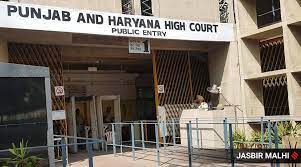
A Division Bench of Chief Justice Sheel Nagu and Justice Sanjiv Berry dismissed the writ petition filed by Punjab Kesari Group’s The Hind Samachar Limited and another petitioner, holding that the action taken by the Punjab Pollution Control Board, including closure of the hotel and disconnection of electricity supply, was fully backed by law and justified under the Water (Prevention and Control of Pollution) Act, 1974 .
The Court’s ruling effectively endorses the Punjab Government’s stand that environmental laws apply uniformly, irrespective of the stature or influence of the entity involved. The petitioner hotel, situated in Civil Lines, Jalandhar, is part of the Chopra Group’s commercial establishments and is linked to the promoters of Punjab Kesari and Hind Samachar newspapers.

During the hearing, the High Court recorded that a detailed inspection conducted on January 13, 2026, revealed extensive and serious violations at the hotel premises. These included non-functional sewage and effluent treatment plants, deliberate bypassing of untreated wastewater into the municipal sewer, lack of authorisation under hazardous waste rules, absence of statutory approvals from the Municipal Corporation, improper handling of hazardous and solid waste, and failure to comply with consent conditions mandated under the Water Act.
The Bench categorically rejected the argument that the hotel should have been given a prior hearing before closure, observing that in cases involving imminent environmental harm, the law empowers the Pollution Control Board to act swiftly. The Court held that granting advance notice in such situations would defeat the very purpose of emergency powers vested in the Board, and clarified that the statute only requires reasons to be recorded in writing, not necessarily communicated before action.
It is not worthy to mention here that electricity supply which has already been disconnected to the hotel of petitioner and the situation would remain same as no relief has been granted by the High Court regarding the action taken on commercial establishments.
The High Court also brushed aside attempts to portray the action as arbitrary or excessive, noting that the Pollution Control Board had recorded detailed reasons justifying the invocation of emergency powers. It further held that the proper remedy for the petitioners lies before the National Green Tribunal under Section 33B of the Water Act, and not through writ petitions.
With the dismissal of the petition, the Punjab Government’s action through the Pollution Control Board stands judicially validated, reinforcing the principle that environmental protection and public health take precedence over corporate privilege.