
Punjab to integrate AI as core subject in schools, marks to reflect on Board certificates as state announces major curriculum overhaul
Kanwar Inder Singh/ royalpatiala.in News/ April 17,2026
Punjab has taken a decisive step toward embedding Artificial Intelligence (AI) at the heart of its school education system, with the Punjab School Education Board (PSEB) hosting a national-level AI Conference and Workshop that brought together policymakers, industry leaders, and academicians to chart a future-ready roadmap for classrooms. The initiative signals a structural shift in how education in Punjab is being reimagined, with a clear focus on aligning learning outcomes with the demands of a rapidly evolving, technology-driven global economy.
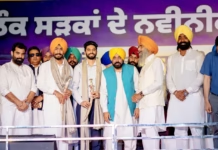
Punjab Education Minister Harjot Singh Bains described the conference as a forward-looking intervention aimed at transforming the education ecosystem, asserting that the integration of Artificial Intelligence will play a crucial role in driving education reforms. “The integration of Artificial Intelligence will play a crucial role in driving education reforms. It will contribute to quality improvement, innovation, and the modernisation of education, ensuring that students are better prepared for the demands of a rapidly evolving, technology-driven world and global challenges,” he said.
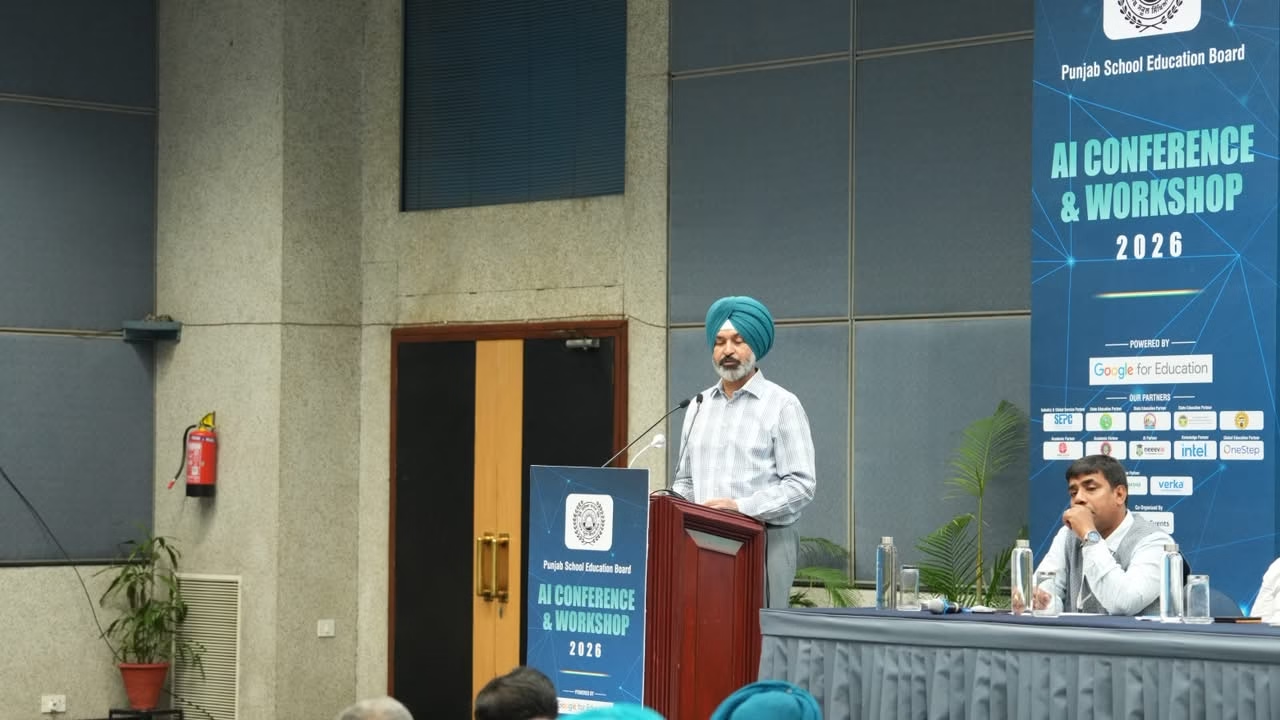
In his welcome and theme address, PSEB Chairman Dr. Amarpal Singh, IAS (Retd.), made a landmark announcement that building on Punjab’s existing compulsory Computer Science curriculum, Artificial Intelligence will now be integrated as a core component of the syllabus. He further stated that learning outcomes in Computer Science will be formally reflected on students’ Board certificates, significantly enhancing the subject’s academic weightage. “Artificial Intelligence will now be integrated as a core component of the syllabus, and learning outcomes in Computer Science will be formally reflected on students’ Board certificates,” he said.
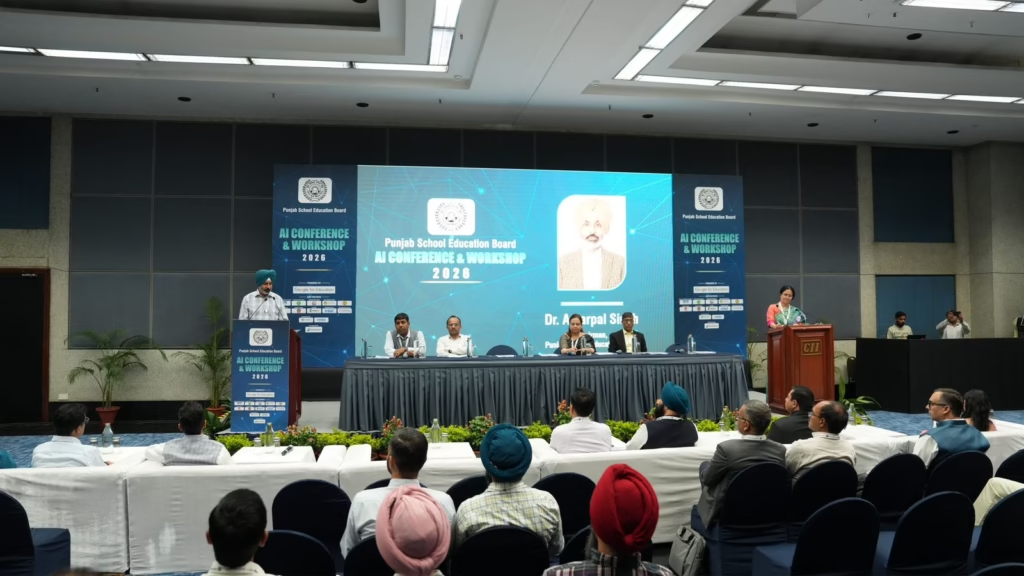
Underscoring the broader vision behind the move, The PSEB emphasised that Artificial Intelligence is fundamentally reshaping how we live and learn. “The question is not whether AI will influence education, but how we can shape that influence with responsibility and foresight,” he stated, adding that PSEB is committed to building an ethical foundation for AI usage to create not just skilled users of technology but responsible digital citizens.
The conference featured detailed deliberations from leading educationists and policymakers across the country. Chairman of the Haryana Board of School Education Prof. Pawan Kumar stressed the urgency of integrating AI across disciplines. “It is high time to incorporate AI into the curriculum across all disciplines. AI should not be limited to Computer Science but extended to all subjects, equipping students from all strata of society. Students are already aware of AI, and the focus should now be on channelizing their potential and making them industry-ready,” he said.
Chairman of the Jammu and Kashmir Board of School Education, Ghulam Hasan Sheikh, highlighted the need for responsible adoption. “The responsibility lies in adopting these technologies thoughtfully to enhance learning without creating disparities. With the right approach, quality education can be delivered while ensuring ethical and safe use of AI,” he noted.
Senior Director for Asia Pacific and Japan at Intel Shweta Khurana underlined the importance of industry collaboration. “Real transformation can be achieved by bringing education and industry onto a common platform to meet evolving industry requirements,” she said, pointing to initiatives aimed at empowering teachers.
Director for Training and Skill Education at CBSE Dr. Biswajit Saha called for bridging technological gaps across states. “All state governments must bridge gaps in technology adoption while aligning with global standards. Punjab’s move to integrate AI into the core Computer Science curriculum is a significant step toward building a future-ready workforce,” he said.
In a special address followed by an interactive session, Hemant Bhalla from Google appreciated the Board’s approach. “Placing responsible AI adoption and ethical considerations at the core of implementation is a commendable vision,” he said.
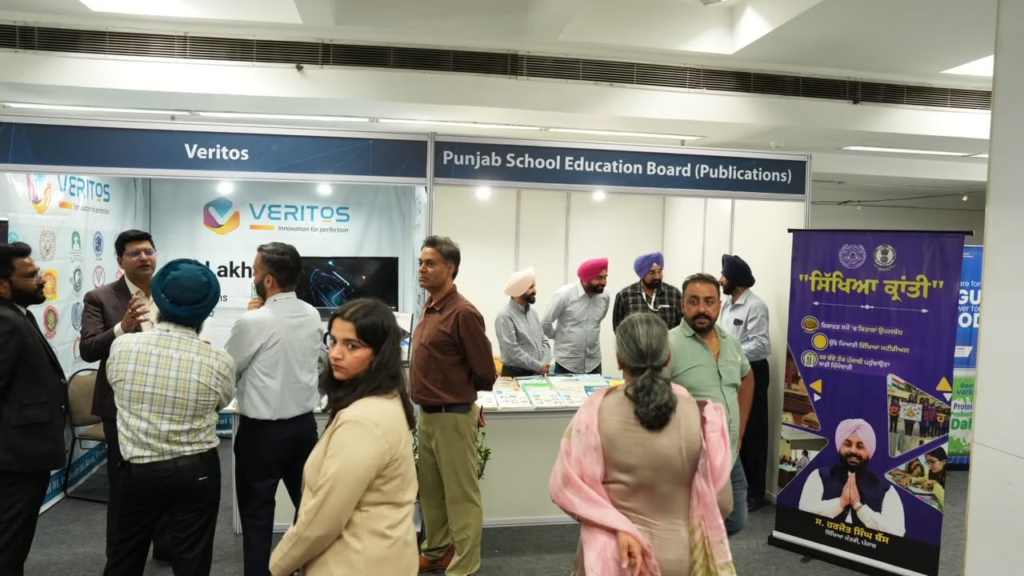
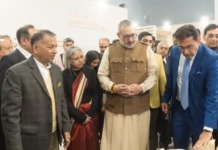
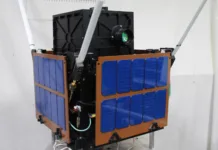
An exhibition organised in collaboration with industry partners showcased AI-based startup projects and models, reflecting the growing ecosystem around educational innovation.
The conference also featured three focused panel discussions that examined the intersection of policy, technology, and workforce readiness. The session on “AI in Education – From Policy to Practice” emphasised bridging policy frameworks with classroom implementation through curriculum integration and institutional preparedness. The panel on “Robotics and STEM – Powering the Skills Economy” explored AI innovation, robotics integration, and industry-aligned education models. The discussion on “AI and Automation – Industry 4.0 and the Future Workforce” highlighted the accelerating adoption of AI across industries, the impact of automation on employment landscapes, and the urgent need for reskilling and upskilling to build future-ready talent.
The conference concluded with an open house discussion, followed by a vote of thanks by PSEB Secretary Keshav Goyal, marking a significant step toward fostering innovation, collaboration, and future-ready education systems in Punjab.