
GUEST COLUMN: Kashmir Valley Transforms into a Winter Wonderland- Hanief
Mohammad Hanief/ royalpatiala.in News/ January 27,2026
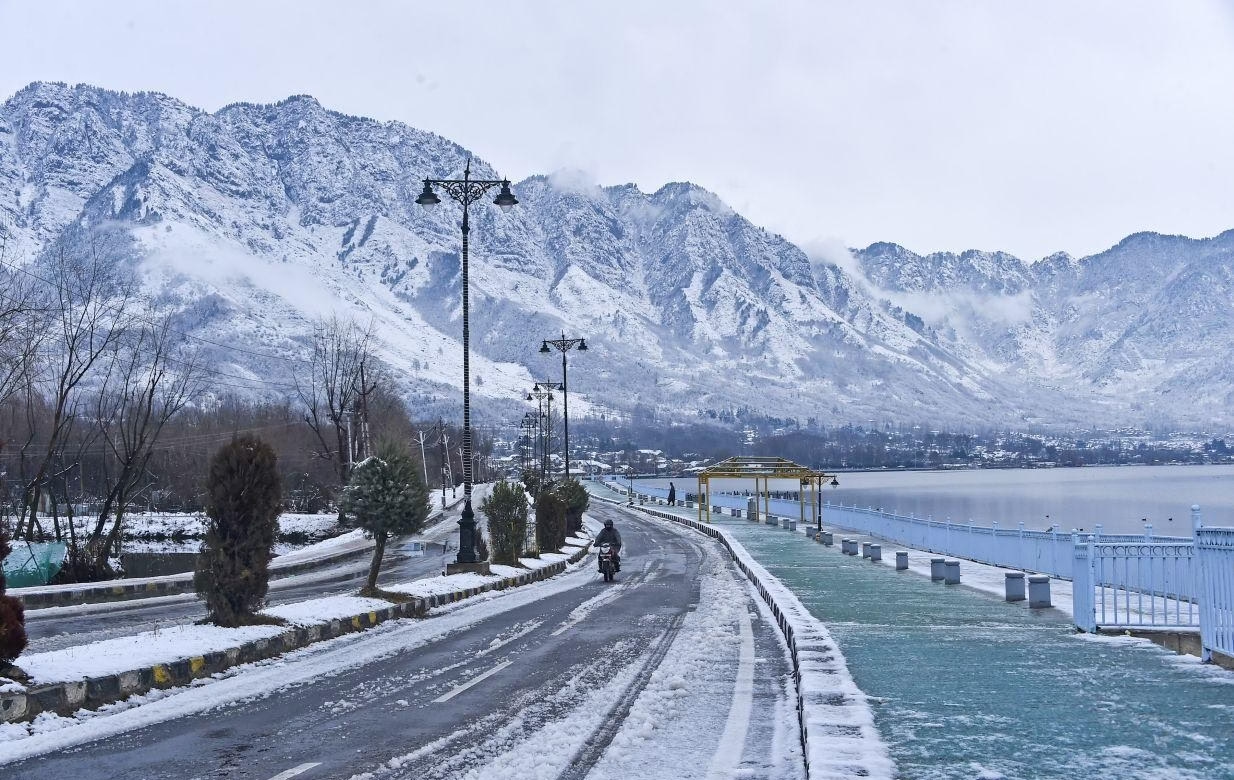
As winter finally settles across the Himalayas, the Kashmir Valley once again transforms into a sweeping winter wonderland. Fresh snowfall cloaks mountains, plains, forests and wetlands in pristine white, reshaping the region into a landscape of striking beauty and deep ecological importance. Yet this arrival carries a quieter undertone. The snow, though enchanting, has appeared later than expected, raising concerns about the environmental consequences of delayed snowfall on the Valley’s fragile natural systems.
The recent snow brought by western disturbances marks the onset of Chillai Kalan, traditionally the harshest phase of Kashmir’s winter. Historically, snowfall during this period followed a predictable rhythm, gradually building a protective cover that sustained ecosystems through months of cold. In recent years, however, winters have grown increasingly erratic. Delayed snowfall, extended dry spells and sudden temperature fluctuations are disrupting climatic patterns that both nature and communities have relied upon for generations.
Across Srinagar and its surrounding areas, winter reshapes familiar landscapes. Chinar trees stand draped in white, their bare branches forming intricate patterns against muted skies. The Zabarwan range appears softened by snow, while the Jhelum River flows through a subdued cityscape. Mughal gardens lie silent beneath snow, revealing geometric elegance in winter stillness. Beneath this calm, however, lies an environmental imbalance triggered by late snow accumulation.
Snowfall plays a critical role in insulating soil and regulating ground temperatures. When snow arrives late, prolonged exposure to cold air causes deeper soil freezing, damaging plant roots and reducing the soil’s capacity to retain moisture. Orchards, particularly apple plantations that anchor Kashmir’s rural economy, are vulnerable to such stress. Delayed snow limits gradual moisture recharge essential for spring flowering, affecting yields and long term soil health.
The consequences of delayed snowfall become even more pronounced in the Valley’s wetlands. Dal Lake and marshlands such as Hokersar, Haigam, Mirgund and Shalbugh serve as winter lifelines for migratory birds arriving from Central Asia, Siberia and northern Europe. These birds time their journeys to coincide with historical winter conditions in Kashmir, where wetlands remained partially ice free and rich in food resources.
When snowfall is delayed, wetlands experience extended dry or semi frozen conditions without the insulating benefit of snow. Water temperatures fluctuate, aquatic vegetation suffers and insect populations decline. Birds arriving on schedule often encounter degraded feeding conditions, forcing them to expend additional energy searching for sustenance. Once snow finally arrives, freezing can be abrupt, compressing feeding opportunities into a shorter window.
Large congregations of birds are then pushed into shrinking open water patches, intensifying competition and increasing vulnerability to stress and disease. Wetlands that once functioned as stable winter refuges face heightened ecological pressure as seasonal cycles compress. Human disturbance during this sensitive period can further weaken the ability of migratory species to survive winter in the Valley.
Forested ecosystems across Kashmir are similarly affected. Delayed snowfall allows wildlife to remain at higher altitudes longer than usual, altering migration and foraging patterns. When heavy snow eventually falls, animals descend rapidly toward lower elevations, often into human dominated landscapes. This sudden movement increases the likelihood of human wildlife conflict and places added pressure on already fragmented forest corridors.
Snow also governs the Valley’s hydrological cycle. Gradual accumulation followed by slow melt replenishes springs, streams and aquifers. Delayed snowfall followed by sudden warming causes rapid runoff rather than absorption, reducing groundwater recharge. This threatens water availability during early summer and weakens the ecological link between winter precipitation and agricultural sustainability.
Winter tourism, while visually enhanced by fresh snowfall, is not immune to these shifts. Destinations such as Gulmarg, Pahalgam and Sonamarg depend on consistent snow cover for seasonal livelihoods. Delayed snowfall shortens the tourism window, creating economic uncertainty. Discussions around artificial snowmaking raise additional environmental concerns, including water extraction and energy use in sensitive alpine zones.
For local communities, delayed snowfall disrupts traditional preparedness. Historically, snowfall signalled predictable changes in mobility, fuel use and resource management. Uncertain winters complicate planning, increasing dependence on external energy sources and placing additional strain on infrastructure. Traditional knowledge systems, finely tuned to seasonal cues, are increasingly challenged by shifting climate behaviour.
Administratively, delayed snowfall complicates winter management. Road clearance, power supply and water distribution systems are designed around historical patterns. Sudden heavy snow following prolonged dry spells strains these systems and heightens the risk of disruption. Ecological monitoring has also become more complex, as authorities balance human needs with protection of wetlands and wildlife habitats during unpredictable winters.
At a broader level, delayed snowfall reflects climate variability across the Himalayan region. Warmer autumns, shifting precipitation and rising average temperatures are altering Kashmir’s winter identity. These changes threaten not only seasonal beauty but also the ecological processes that have sustained biodiversity and agriculture for centuries.
Despite these concerns, snowfall still brings renewal. Snow binds landscapes, ecosystems and communities in a shared seasonal experience. It restores visual harmony and replenishes moisture starved land, even when late. Yet timing now matters as much as presence.
Conservationists warn that protecting Kashmir’s winter environment now requires a more integrated approach that recognises snow as an ecological resource rather than a seasonal inconvenience. Wetland restoration, protection of inflow channels, regulation of construction near lakes and stricter control of winter disturbance are increasingly viewed as essential safeguards. Forest conservation, particularly maintaining continuous corridors, is equally vital as wildlife movement patterns shift in response to erratic snowfall.
Public awareness has also emerged as a critical component of winter resilience. Understanding how delayed snowfall affects water security, food systems and biodiversity can encourage more responsible behaviour during peak winter months. Reduced pollution, mindful tourism practices and respect for sensitive habitats can collectively ease pressure on ecosystems already strained by climate variability.
The future of Kashmir’s winters will likely depend on how effectively environmental planning adapts to changing patterns. Scientific monitoring of snowfall trends, groundwater recharge and migratory bird populations is becoming indispensable. Integrating traditional ecological knowledge with modern climate research may offer pathways to sustain the Valley’s delicate balance.
In this evolving landscape, winter remains both a warning and a promise. Snow continues to define Kashmir’s identity, but its shifting rhythm signals the need for deeper understanding and protection. Preserving the Valley’s winter wonderland now means safeguarding the timing, quality and ecological role of snowfall itself, ensuring that beauty and balance endure together for generations to come.
Only by recognising winter as a living system, rather than a static season, can Kashmir hope to navigate the uncertainties ahead. The snow that arrives, early or late, carries lessons about limits, resilience and responsibility, reminding all who witness it that nature’s timing remains central to survival in the Himalayan heartland. That truth now defines the Valley’s future more than ever before collectively.

NOTE: The views expressed by the wtiter, author are personal. The author is a senior analyst and can be mailed at [email protected] / X/Twitter: @haniefmha