
Widespread protest across country including Punjab against privatization
Kanwar Inder Singh/ royalpatiala.in News/ March 10,2026
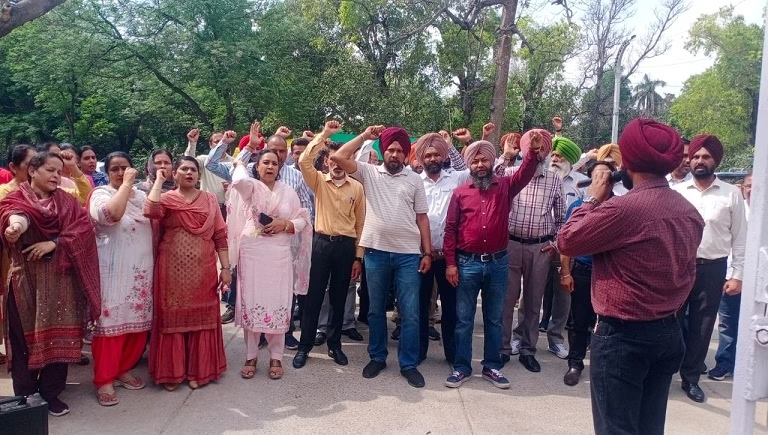
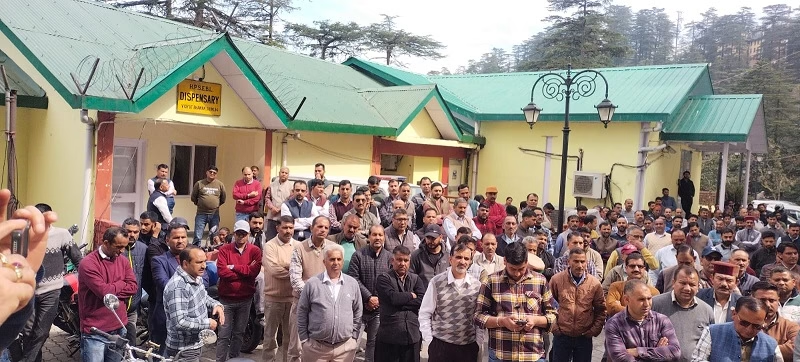
Widespread protests were held against the privatization push by the government of India across the country including Punjab.
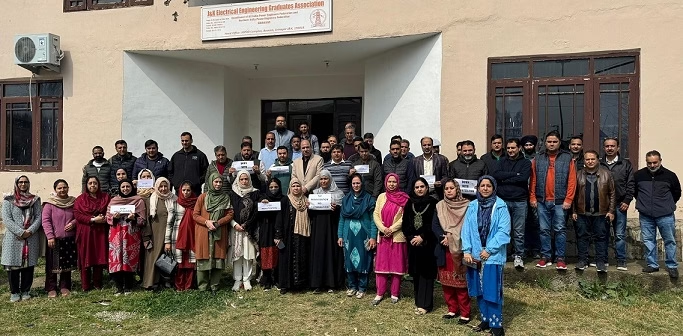
The protests by power sector engineers and employees were held in major cities of Jammu and Kashmir, Uttrakhand, Uttar Pradesh, Punjab, Himachal Pradesh, Telaangans, West Bengal, Jharkhand, Gujarat, Assam, and other states.
VK Gupta media advisor AIPEF informed that at all places speakers were worried about financial weakening of public DISCOMs, increased electricity tariffs for farmers and domestic consumers, privatization of profits and socialization of losses and threat to affordable and universal electricity access.
They demanded the immediate withdrawal of the Electricity (Amendment) Bill 2025, and protection of cross-subsidy and affordable electricity for farmers and domestic consumers. Meaningful consultation with power employees, engineers, farmers, and consumer organizations before any reforms are undertaken.
Shailendra Dubey chairman AIPEF said that the proposed Electricity (Amendment) Bill 2025 poses serious risks to farmers, consumers, power sector employees, and the federal structure of the country. The Bill primarily promotes privatization of electricity distribution, weakens social protections in the power sector, and centralizes decision-making powers.
Suneel Grover Paron AIPEF said that removal of cross-subsidy within five years will lead to a sharp increase in electricity tariffs for agricultural consumers.
Private distribution companies are unlikely to serve rural and low-revenue agricultural areas, affecting reliable supply to villages.Increased power tariffs may lead to higher cost of agricultural production, ultimately affecting food prices.
Allowing multiple distribution licensees in the same area will result in private companies choosing only high-paying consumers, leaving public DISCOMs with loss-making consumers. • Backdoor privatization of distribution will lead to job insecurity for thousands of power sector employees and engineers.
Gradual elimination of cross-subsidy will cause significant tariff increases for domestic consumers, particularly low-income households. Electricity may become market-driven rather than service-oriented, undermining universal access.
Electricity is a Concurrent Subject under the Constitution, but the Bill increases central government control over state electricity policies. Creation of new central body National Electricity Council and expanded rule-making powers will reduce the autonomon.y of state governments. States may lose flexibility in determining tariffs, subsidies, and distribution policies according to local needs.
Electricity must remain a public service ensuring affordable and reliable power for all citizens.It was apprehended that the Government may table the Electricity (Amendment) Bill 2025 in Parliament on 10 March 2026 but as per the latest available information the Bill has not yet been included in the listed agenda of Parliament for the present sessi